
Program
Safe Journeys Program
The Safe Journeys Program is a practical and engaging curriculum-based Year 6 program that incorporates a visit to the state-of-the-art Road to Zero Education Complex at Melbourne Museum.
The Safe Journeys Program is a practical and engaging curriculum-aligned road safety program designed specifically for Year 6 students. It supports students to become safe, independent travellers as they near the exciting milestone of starting secondary school.
Created in collaboration with Year 6 teachers, the program empowers students to develop essential trip planning skills – including the best route to and from secondary school – as well as safe road and public transport practices.
The Safe Journeys Program includes eight engaging activities designed to be undertaken at school and two activities at Road to Zero, Melbourne Museum.
A key aspect of the program is the opportunity for students to apply their road safety knowledge by planning and undertaking the journey to Melbourne Museum, where they’ll extend their learning through interactive, immersive road safety experiences.
The Safe Journeys Program is supported by a Teacher Guide – this includes lesson activities, teaching tips, additional resource links and curriculum outcomes.
Student work can be completed in the Student Road Map – this includes an interactive workbook that allows students to keep their learning in one place and collect virtual stamps along the way to recognise their learning.
The Safe Journeys Program Overview, Teacher Guide and Student Road Map can all be downloaded below.
Health and Physical Education: Levels 5 and 6
Contribution to health communities
- investigate different sources, quality and types of health information and how these apply to their own and others’ health choices VC2HP6P09
- analyse how various strategies influence the health, safety, relationships and wellbeing of individuals and communities VC2HP6P10
English: Level 6
Language for expressing and developing ideas
- identify the ways that still images (such as figures, tables, diagrams, maps and graphs), moving images and sound are used in texts to create point of view VC2E6LA07
Interacting with others
- deliver structured spoken and multimodal texts to an intended audience for a specific purpose, using appropriate features of voice VC2E6LY02
Texts in context
- examine texts, including media texts, that represent ideas and events, and identify how they reflect the context in which they were created VC2E6LY06
Analysing, interpreting and evaluating
- analyse how text structures and language features work together to meet the purpose of a text and engage and influence audiences VC2E6LY07
Media Arts: Levels 5 and 6
Creating
- use media languages, media technologies and production processes to construct media arts works that communicate ideas, perspectives and meaning for specific audiences VC2AMA6C01
Ethical Capability: Levels 5 and 6
Understanding ethical concepts and perspectives
- the meaning of a worldview, and how worldviews influence ethical perspectives, and simple connections between influences on ethical perspectives, such as between rights and responsibilities and shared expectations, or between worldviews and values VC2CE6U02
Excursion dates: Term 4
Timing: 10:30am–2pm (3.5 hours, including a lunch break)
Where: Road to Zero, Melbourne Museum, 11 Nicholson Street, Carlton
Sessions: Each session accommodates up to 25 Year 6 students
Requirements: Completing activities 1-3 of the Safe Journeys Teacher Guide prior to your visit to Melbourne Museum. Public transport/active travel to the museum and back to school.
To secure your spot in Term 4, please submit an online booking request or contact the Museum Victoria bookings office on 13 11 02
To support school leaders, Road Safety Education Victoria has developed a suite of tools and resources to help embed road safety as a whole-of-school community approach and foster a culture of safety across staff, students and families. We recommend starting with The Good Practice Guide, which outlines practical strategies for integrating road safety into your school environment.
Download and adapt the content in these templates based on your school’s experience and help spread the word about your visit to Road to Zero. You can do this via a social media post on your school channels, putting an article in your school newsletter and/or on your intranet, or sending a media release to your local paper.
Recommended Resources
Bike Ed
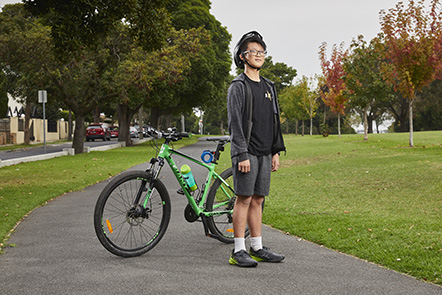
Bike Ed is a Curriculum 2.0 aligned and differentiated program that helps ALL students develop safe bike riding skills and become confident, responsible road users.
Bike Ed
Bike Ed is a Curriculum 2.0 aligned and differentiated program that helps ALL students develop safe bike riding skills and become confident, responsible road users.

The Safe Migration Project - Primary School
The TAC’s Safe Migration Project is designed to give parents and carers practical tips to help their children travel safely to and from primary school.
The Safe Migration Project - Primary School
The TAC’s Safe Migration Project is designed to give parents and carers practical tips to help their children travel safely to and from primary school.

E-scooters and E-bikes in Victoria
Information relating to E-scooter and E-bike use in Victoria.
E-scooters and E-bikes in Victoria
Information relating to E-scooter and E-bike use in Victoria.
That's the Sound the Street Makes
An engaging storybook for children to encourage conversation and learning about road safety.
That's the Sound the Street Makes
An engaging storybook for children to encourage conversation and learning about road safety.

How Safe Is Your Car
Online resource where parents and young drivers can research new and used car safety ratings and statistics.
How Safe Is Your Car
Online resource where parents and young drivers can research new and used car safety ratings and statistics.